Which Smart Lock Fits Your Door? A Door-by-Door Guide for India
Measure your door in 5 minutes, then match a smart lock to it: wooden, glass, aluminium, metal and flat doors in India, including options without Wi-Fi.

By Abhi Bavishi
Match the lock to the door before you match it to the features. Measure the door’s thickness, backset and edge width, then choose the lock type your door already takes: mortise, rim or deadbolt. Most Indian wooden main doors are 35–45 mm thick and take a mortise lock. Glass, aluminium, sliding, double and steel doors need hardware made for them, and toughened glass cannot be drilled once it has been toughened. If your door is not a standard wooden one, send us photos and measurements before you buy anything.
How this guide works. Smartify sells some of the locks named here, so the quick-match table below only lists locks we stock, with the price shown on each product page when this page was last built. Facts about doors come from the sources linked in the text. We have not lab-tested any lock, and nothing here is a rating. Last reviewed 16 October 2026.
The short answer, by door type
- Solid wooden door: the easiest fit. A mortise lock for a door that is already cut for one, or a rim lock if you would rather not cut.
- Hollow or flush door: confirm there is solid timber where the lock goes before you commit to a mortise lock. A rim lock avoids the problem.
- Glass door: the glass decides. If there is no cut-out already, a new one cannot be made in toughened glass, so you need a lock that matches the existing fittings.
- Aluminium, UPVC and sliding doors: the frame and the mechanism decide. Many are fitted with a cylinder inside a multipoint mechanism, and a stand-alone mortise lock is not the answer.
- Double doors: only one leaf carries the lock. Plan the other leaf’s bolts as part of the job.
- Steel or security door: needs a lock rated for a thin metal edge, and you should not drill it yourself.
- Flat or apartment door: check the society’s and landlord’s rules and your fire-exit path first, then pick a lock type that does not damage the door.
Measure your door in 5 minutes
You need a tape measure, a phone camera and a pencil. Write the numbers on a note, because every lock lists the range it fits and every installer will ask for them.
- Thickness. Measure from one face of the door to the other at the height of the lock, with the door open. Typical Indian main doors are about 35–45 mm and many solid doors are 40 mm. Older or premium hardwood doors can be 50 mm or more and may need a thick-door spindle or an extension kit; doors thinner than 35 mm need a lock that supports the thin end of its range (Studio Matrx door compatibility guide).
- Door edge and stile width. Look at the edge of the door where the latch comes out. Note the width of the solid timber or frame around the lock. A lock body has to fit inside it, and narrow aluminium and steel edges are the usual problem.
- Backset. Measure from the edge of the door to the centre of the handle spindle or cylinder. Indian mortise locks are commonly 60 mm or 85 mm, and the backset has to match the lock, otherwise the handles will not sit correctly (Studio Matrx installation guide). Some makers state 70 mm, so match the number on the lock’s drawing.
- Handle height and direction. Note how high the current handle sits and which hand you use on it. Many locks can be reversed, but your installer has to set the handle and latch for your door.
- Hinge side and opening. Stand outside the door: are the hinges on your left or right, and does the door open towards you or away from you?
- Existing lock and cut-outs. Photograph the lock on both faces and the edge. Note whether it is a mortise lock (a body sunk into the edge), a rim lock (a box on the face), or a deadbolt, and whether there are extra holes, for example for a viewer or a second bolt.
- Frame and outer door. Check the gap to the frame and to any steel safety or grille door outside. A lock that clears the wooden door can still hit the grille.
Wooden doors: solid and hollow
Solid wooden doors
This is the door most smart locks are designed for. Most are 35–45 mm and many are 40 mm, so check the thickness range stated on the lock’s own page, because they differ. On the compare page, for example, the Openapp Door locks state 34–60 mm for wooden doors, while one thick-door model states 40–90 mm, which leaves a 35–39 mm door outside its range. A mortise lock replaces your latch and sits in a pocket cut into the door edge, so it suits a door already cut for one. For the models side by side, see which smart lock fits your main door.
Hollow and flush doors
A flush door is a thin skin over a core, and a mortise pocket needs solid timber to hold the lock body and the screws. Ask your carpenter whether the door has a solid lock block at lock height. If it does not, choose a rim lock that mounts on the surface, or have the carpenter add one before the lock goes in. A hollow door or a loose, warped frame can flex and jam the bolt (Studio Matrx), so fix a loose door or frame before fitting any lock.
Glass doors
Frameless glass doors are the hardest to fit. Toughened glass is drilled and cut before it is toughened, so you cannot add a hole afterwards: “you cannot drill a frameless toughened glass panel after the fact” (Studio Matrx). A 2019 DTU study of drilling tempered glass found that the residual stress allows a hole only about 20% of the glass thickness deep before fragmentation begins (Nielsen et al.), far short of a through-hole for a lock. Do not let anyone drill your glass to fit a smart lock.
- Patch fittings. A lock held by patch fittings has to match the glass thickness, which is often 8–12 mm, and the cut-outs already in the glass.
- Framed glass doors. If the glass sits in a timber or aluminium frame, the lock goes in the frame. Measure the stile width and treat it like an aluminium door.
- If there is no matching cut-out, the options are a new glass panel made with the right cut-outs, a lock that clamps without drilling where one exists, or leaving the glass door alone and securing the door behind it.
We do not list a lock made for glass doors today, so we will not pretend one fits. Send photos of the fittings and the glass thickness and we will tell you what does, or that nothing does.
Aluminium, UPVC and sliding doors
These doors usually have a cylinder inside a multipoint mechanism, which throws several bolts or hooks at once. A smart euro-cylinder replaces only the cylinder and the existing hooks still do the locking, so compatibility is about the cylinder and the mechanism, not a stand-alone lock body (Studio Matrx). Some smart mortise locks are explicitly not for metal, glass or sliding doors: our neutral buyer’s guide notes this for the Qubo Essential.
- Measure the width of the aluminium stile where the lock sits. Narrow stiles rule out most bulky mortise bodies.
- Photograph the existing handle and cylinder, and note the cylinder length.
- Sliding doors usually need a hook or latch lock made for sliding frames. A mortise lock does not belong on one.
- For a balcony or gate that has a hasp, a padlock-style smart lock is a practical alternative. We stock the Openapp Latch Pro, which its product page says attaches to doors, gates and shutters and works over the internet. It is not a replacement for a main-door lock, and it is Wi-Fi only, with no hub.
Double doors
With a double door, only one leaf, the active leaf, normally carries the lock. The other leaf is held by bolts at the top and bottom, so a smart lock secures the active leaf and the bolts do the rest. Measure the overlap where the two leaves meet, because the lock body has to sit within the active leaf’s edge, and tell your installer how the second leaf is held. We have not found a published guide for double doors that we can cite, so treat this as a question for the installer rather than a promise.
Metal and security doors
Steel and MS doors need a lock rated for a thin metal edge, often a narrow mortise or a surface rim lock, plus proper drilling and backing (Studio Matrx). Do not drill a steel door at home, because it ruins the door’s own locking. In many flats there is a steel safety door outside the wooden door, so measure the gap and the handle clearance between them.
Flat and apartment doors
- Ask first. Check with your society or landlord before you change a door, especially its outer face. If you rent, prefer a surface-mounted rim lock, which needs no pocket, and keep the old lock so you can put it back.
- You must be able to get out. Leaving has to be effortless from inside in one action, with no key, code or phone. Never fit a lock that can trap someone, and on an escape-route door the lock has to release on power loss (Studio Matrx). The Yale YDME70 and YDME90 pages list anti-panic exit from inside.
- Plan for people who are not family. Cooks, cleaners and delivery staff need access. Choose a lock that gives time-limited or temporary codes; the Aqara N100 page lists temporary passwords.
- Signal at the door. If you plan a Wi-Fi lock, check your router’s signal on the landing side of the door, not just inside.
Mortise, rim or deadbolt: which retrofit suits which door
| Lock type | What it is | Suits | Watch for |
|---|---|---|---|
| Mortise | Replaces your latch. The body sits in a pocket cut into the door edge, with a handle on both sides. | Solid wooden main doors that already have a mortise lock. The usual choice for Indian main doors. | Thickness, backset, edge width. Needs a carpenter if the pocket is not already cut. |
| Rim | A box that mounts on the door face. No pocket needed. | Doors you do not want to cut: rented flats, flush doors, extra locks. | Room on the door face, clearance from the frame and any outer safety door. |
| Deadbolt | Adds a bolt that throws into the frame. The door has to be prepared for it. | Doors already bored for a deadbolt. | It is a different installation job from a mortise lock, so confirm your door is bored for one. |
A deadbolt, a replacement mortise lock and a retrofit motor are three different jobs, and “fits Indian doors” is not a measurement.
Quick match: your door, the lock type, what to check and what we stock
Prices are the ones on each product page when this page was last built, so confirm the final price with fitting before you order. “Door range stated” is copied from the product page, and where the page states none we say so rather than guess.
| Your door | Lock type that suits it | Check first | Locks we stock for it (price today) |
|---|---|---|---|
| Solid wooden main door, about 35–45 mm, already cut for a mortise lock | Mortise | Thickness inside the lock’s stated range; backset; mortise body size; handle side |
|
| Wooden or flush door you do not want to cut, or a rented flat | Rim (surface-mounted) | Room on the door face for the lock body; clearance from the frame and any outer safety door |
|
| Door already prepared for a deadbolt | Deadbolt | The door really is bored for a deadbolt; thickness and backset; key override |
|
| Thick door, above about 45 mm | Mortise or rim with a stated thick-door range | A lock whose stated range includes your measurement, or a thick-door spindle kit | None of the priced locks above states a range past 60 mm. Send us your measurement and we will check, or see the thick-door models on the compare page. |
| Frameless glass, glass with patch fittings, aluminium or UPVC frame, sliding, double or steel safety door | Purpose-made hardware for that door | Existing cut-outs, stile width, glass thickness, cylinder and mechanism type | We do not list a lock made for these doors today, so we will not match one for you from this page. Send photos and measurements and we will say what fits, or that nothing does. |
The full side-by-side, including pros and cons of each lock, is on the smart lock comparison, and every lock and accessory is on the smart locks price list.
Without Wi-Fi, and why we put open-stack locks first
Locks that need no Wi-Fi
- Stand-alone locks work only at the door, by PIN, card, fingerprint or key. The Yale models in the table list these and their product pages state no app or Wi-Fi. They run on batteries, so a power cut does not stop local entry.
- Bluetooth locks talk to your phone near the door. For remote access they need extra hardware, such as a separate gateway for the Qubo Select, as our buyer’s guide notes.
- Hub-based locks (below) reach your phone through a hub instead of through the lock’s own Wi-Fi.
Open stack: Zigbee and Matter locks on a hub
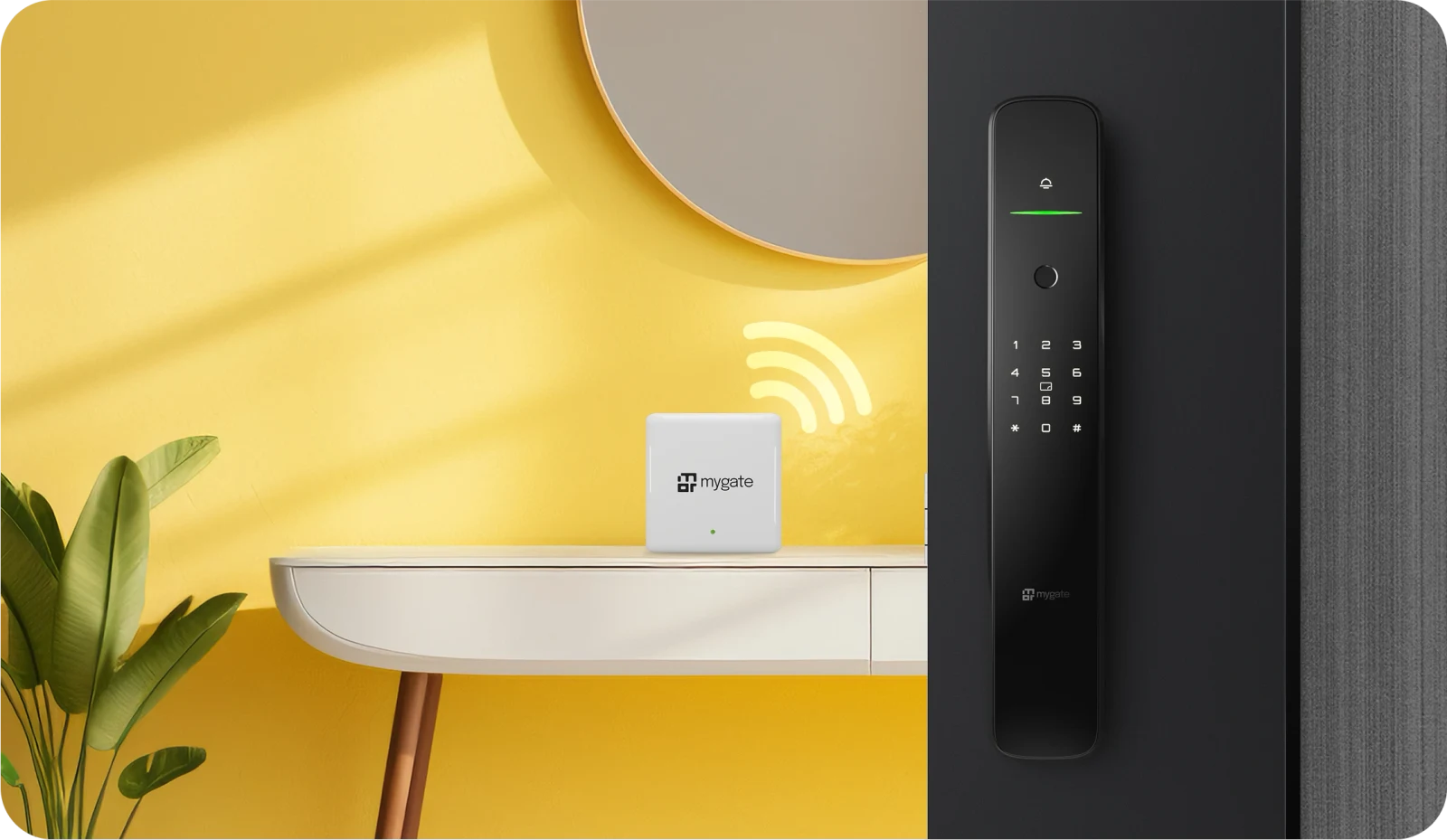
Our recommendation is an open-stack lock, meaning Zigbee or Matter, working with a hub. The lock joins your home’s hub, and many hubs and apps can use the same device, so you can change your phone, hub or app without replacing the lock. Zigbee is a low-power mesh protocol built for automation devices (Connectivity Standards Alliance); Matter is a common device language that runs over Wi-Fi, Thread and Ethernet (CSA). The Aqara N100 on our list is Zigbee, with remote access through a Zigbee hub or Apple HomeKit. The trade-off is that you need the hub, and the lock’s page does not state its door range, so a door check comes first. The longer explanation is in Zigbee hub vs Wi-Fi for a smart home.
Wi-Fi only, no hub: listed, with trade-offs
Wi-Fi-only locks connect straight to your router and the maker’s app. We keep them listed, ranked lower, and labelled “Wi-Fi only, no hub”. The trade-offs are that remote features depend on your internet and the maker’s service, each brand needs its own app, and you need a working Wi-Fi signal at the door. Local entry by PIN or fingerprint still works without internet. The Openapp Door locks, the Zemote NFS04 and the Openapp Latch Pro in the table are Wi-Fi only.
What installation costs
These are indicative labour figures from independent Indian guides dated 24 July 2026, not Smartify quotes. They exclude the lock, and the guides do not say whether GST is included or how much the figures vary by city.
| Line item | Indicative range | Source |
|---|---|---|
| Installation labour, per door | ₹500–2,500, more where the door must be cut | Studio Matrx cost guide |
| Simple battery mortise retrofit, lock supplied | Often ₹500–1,500 in labour | Studio Matrx installation guide |
| Door preparation, adapter or plate, new mortise pocket | ₹0–4,000 or more | Studio Matrx cost guide |
| Fuller jobs, such as a new door cut or a wired strike with an electrician | ₹2,000–6,000 or more | Studio Matrx installation guide |
Ask for one quote that covers the lock, the fitting, any hub or gateway, and the backup access.
Send us a photo of your door
The fastest way to find out whether a lock fits is to send us the measurements from the five-minute check, plus photos. On WhatsApp, send:
- A photo of the whole door, front and back
- A close-up of the door edge where the latch comes out, with a tape measure along it
- A photo of your current lock on both faces
- Thickness, backset, which side the hinges are on, and whether the door opens in or out
WhatsApp us your door photo. We will say which of the locks above fits, which does not, and what it costs fitted. If nothing we stock fits your door, we will say so.
Frequently asked questions
Which smart lock suits a wooden door?
For a solid wooden main door that is already cut for a mortise lock, choose a mortise lock whose stated thickness range includes your door. Most Indian wooden main doors are 35–45 mm thick. If you do not want to cut the door, or it is a hollow flush door, a rim lock avoids the pocket. Check the thickness range, backset and handle side before you order, and send us photos if you are unsure.
Can I fit a smart lock on a glass door?
Only if the lock matches the fittings already in the glass. Toughened glass has to be drilled before it is toughened, so a new hole cannot be added afterwards, and a patch-fitting lock has to match the glass thickness, often 8–12 mm, and the existing cut-outs. If your glass door has no suitable cut-out, do not drill it. Send photos and we will tell you what fits, or that nothing does.
Will a smart lock fit my aluminium, UPVC or sliding door?
Not usually as a stand-alone lock. These doors normally have a cylinder inside a multipoint mechanism, and a smart euro-cylinder replaces only the cylinder, so compatibility depends on the cylinder and the mechanism. Narrow aluminium stiles rule out most mortise bodies, and sliding doors need hardware made for sliding frames. Measure the stile width and photograph the handle and cylinder before you buy.
Can I put a smart lock on a rented flat or apartment door?
Often, but check with your landlord and your society first. A surface-mounted rim lock needs no pocket, so the door is easier to restore, and you should keep the old lock. Whatever you fit, you must be able to leave in one action without a key, code or phone, so never fit a lock that can trap someone inside.
Do I need Wi-Fi for a smart lock?
No. Stand-alone locks, such as the Yale models we list, work by PIN, card, fingerprint or key with no Wi-Fi, and they run on batteries, so a power cut does not stop local entry. You only need Wi-Fi, or a hub, for remote features such as unlocking for a guest while you are away. A Wi-Fi lock also needs a working signal at the door.
Why do you put open-stack locks ahead of Wi-Fi-only locks?
Zigbee and Matter locks work with a hub, and many hubs and apps can use the same device, so you can change your phone, hub or app without replacing the lock. A Wi-Fi-only lock connects straight to your router and the maker’s app, so remote features depend on your internet and the maker’s service. We still list Wi-Fi-only locks, ranked lower and labelled “Wi-Fi only, no hub”.
Where to go next
- Which smart lock fits your main door: every lock we list, side by side, with pros and cons
- Best smart locks in India 2026: a neutral guide across seven brands
- Fingerprint vs PIN vs app unlock: how each way of opening the door behaves in Indian homes
- Smart locks price list: prices and stock for every lock and accessory