SmartNode Review 2026: Products, Pros, Cons & Better Alternatives
Considering SmartNode home automation? This 2026 review covers its products, Wi-Fi architecture, pros, limitations, warranty and SmartNode alternatives for a future-ready home.

By Abhi Bavishi
Smartify verdict
Conditional recommendationStrong retrofit value and polished physical controls, but buyers should scrutinise the closed core platform, network design and long-term replacement path.
- Best suited to
- Contained retrofits
- Core architecture
- Direct Wi-Fi
- Published warranty
- 5 years, limited
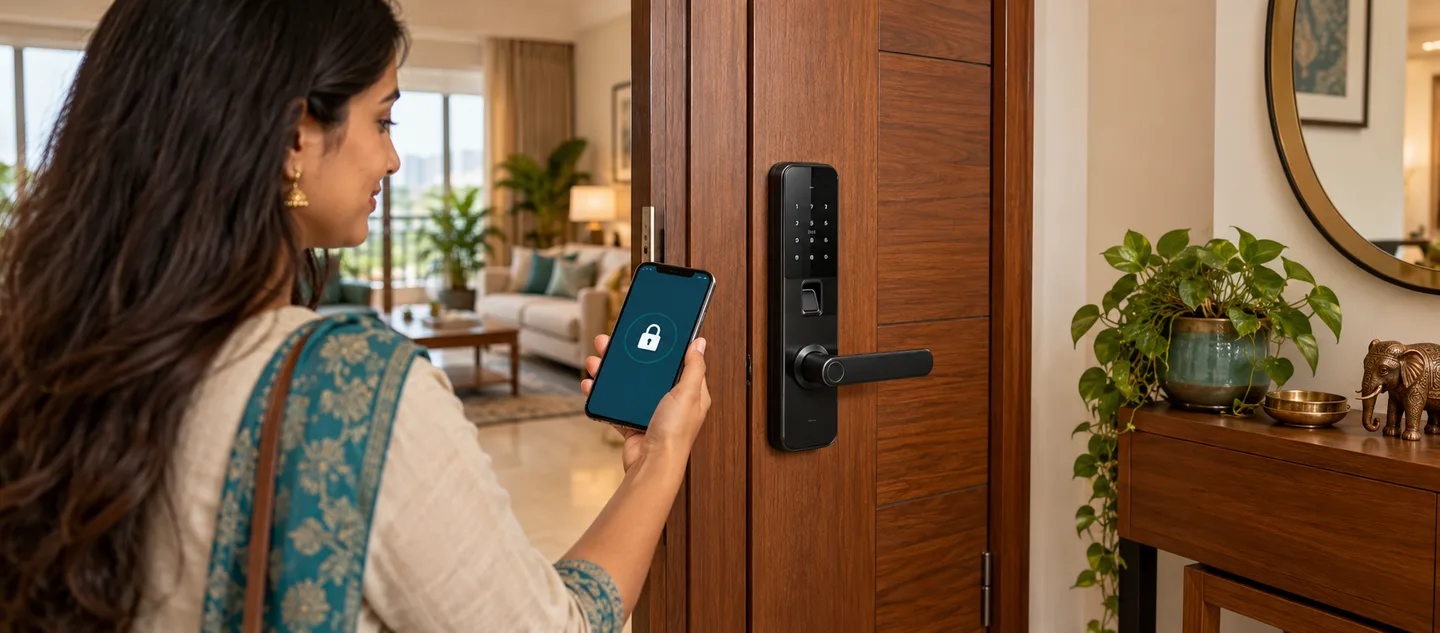
SmartNode offers an Indian retrofit range covering lights, fans, dimmers, heavy appliances, curtains, ACs, televisions, doors and gates without rewiring, plus panels, keypads, screens, locks and DALI gateways.
The harder question is whether SmartNode is the right foundation for an evolving home.
Our view: SmartNode is not an open-protocol smart-home platform. It suits a price-conscious buyer wanting a contained professional retrofit, but it should not be presented as a future-proof ecosystem. For a large whole-home project where long-term choice matters, compare it with a documented Zigbee, Z-Wave, Matter or multi-protocol architecture.
Editorial disclosure: Smartify is a multi-brand smart-home designer and integrator. We sell and integrate products that may compete with SmartNode. This review is based on publicly available product information reviewed on 14 August 2026; we have not lab-tested a current full-home SmartNode installation. Buyers should verify the exact bill of materials and integrations in writing before purchase.
SmartNode at a glance
| Best for | Think twice if you need |
|---|---|
| Retrofitting an existing Indian switchboard | A documented Matter, Zigbee, Z-Wave or Thread backbone |
| A few rooms or a contained automation scope | Easy substitution of devices from multiple manufacturers |
| Custom touch panels and scene keypads | A public local API, MQTT or native Home Assistant integration |
| Lights, fans, dimmers and mixed heavy loads | A large sensor-led automation ecosystem |
| Physical control during an internet outage | Clear model-by-model integration and certification documentation |
| One installer and one primary application | Transparent online whole-home pricing |
What is SmartNode home automation?
SmartNode is an Indian automation manufacturer headquartered in Vadodara. Its core “Smart Device” products are compact Wi-Fi modules fitted behind existing wall switches or SmartNode touch interfaces. The modules control combinations of normal lights, dimmable circuits, fans and heavy loads such as geysers or air conditioners. Current models cover two to ten controlled loads, depending on the mix required. SmartNode describes the core architecture and model range on its Smart Device page.
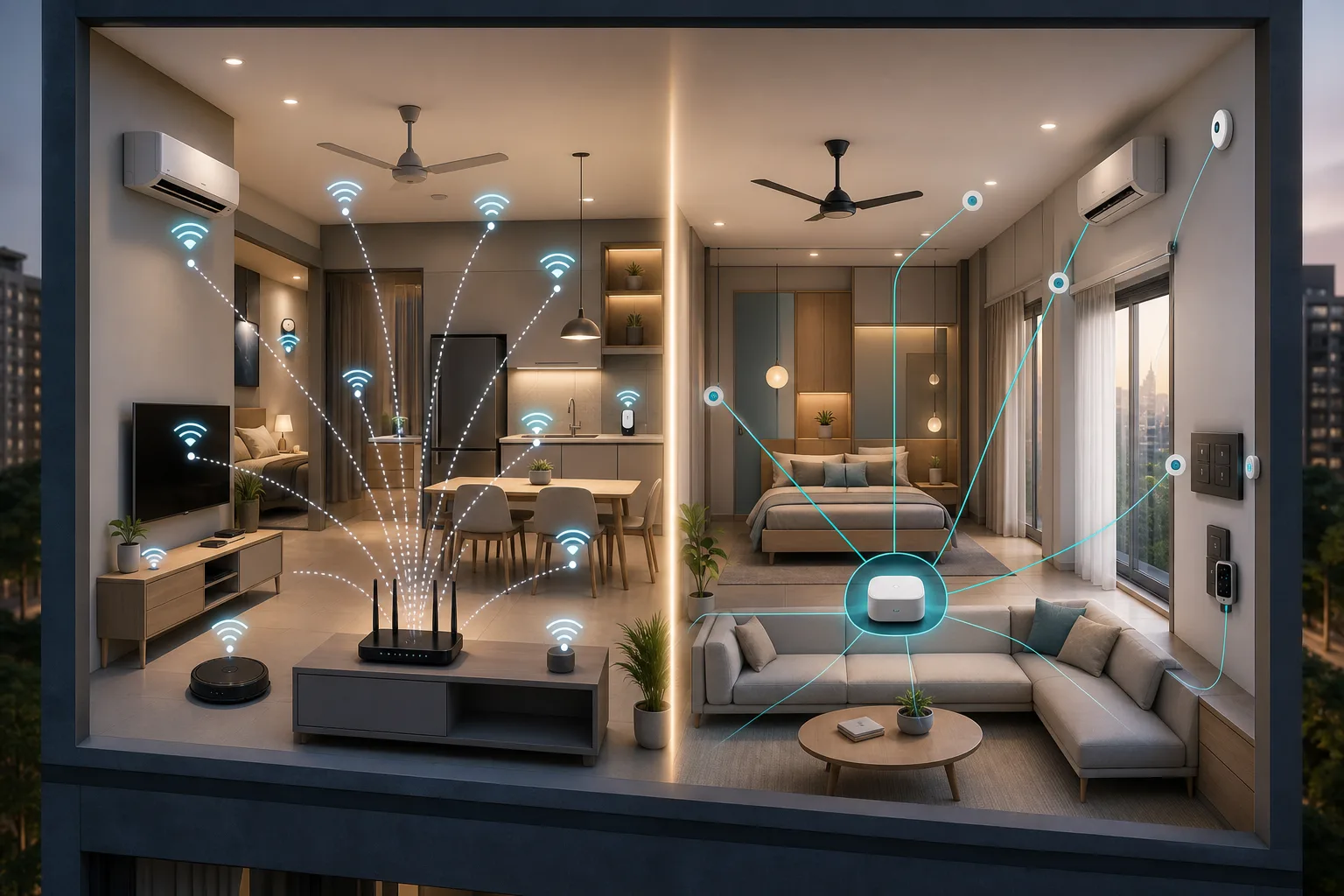
Unlike a typical Zigbee or Z-Wave installation, the main SmartNode modules do not require a dedicated radio hub. They connect through the home’s Wi-Fi network and are managed in the SmartNode application. Regular switches can remain in use, while compatible touch panels, keypads, app controls and voice assistants provide additional interfaces.
This is attractive in a finished apartment: no new automation bus through the walls, and the visible switch plate can remain conventional or be upgraded. It also ties the automation layer closely to SmartNode hardware, firmware, applications and supported integrations.
SmartNode is not literally a Wi-Fi-only catalogue. Its “Remote Devices” are non-Wi-Fi semi-automation modules controlled through an infrared remote. Curtain products can use RF control. The company also sells DALI lighting gateways and IR products for HVAC and entertainment. The more accurate description is a primarily direct-Wi-Fi whole-home platform with additional DALI, IR and RF products, not a single-radio system. The current products overview lists these families.
SmartNode product range
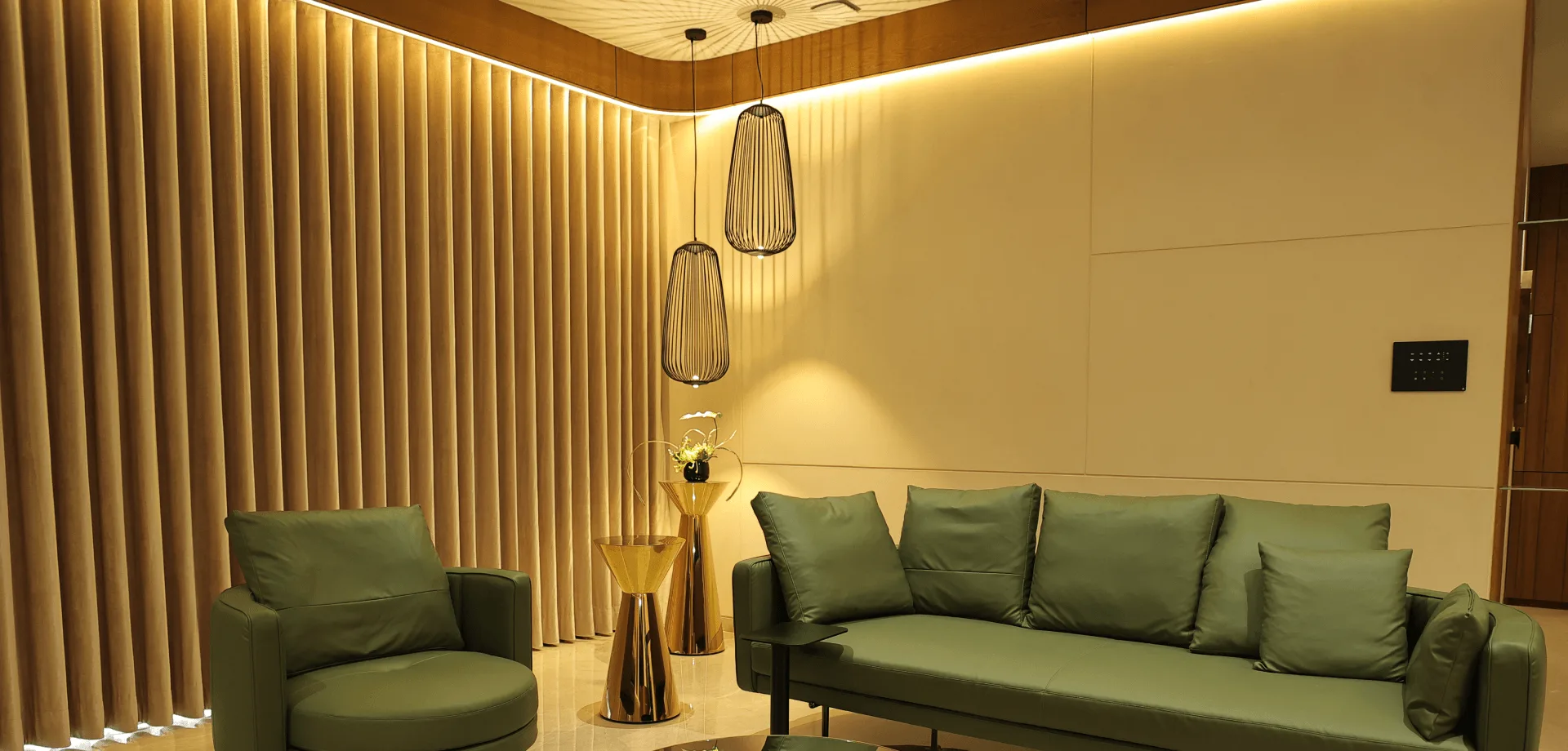
SmartNode covers far more than retrofit switches. The current public catalogue can be grouped as follows.
| Product family | What it does | Important consideration |
|---|---|---|
| Smart Devices | Wi-Fi retrofit modules for 2–10 loads, including fans, dimmers, normal and heavy loads | Each smart module uses the home network and SmartNode platform |
| Remote Devices | Non-Wi-Fi control of lights, fans and loads through an IR remote | Semi-automation rather than app-connected whole-home control |
| Touch panels and keypads | Custom front-end controls, scene keys, rotary or touch interfaces and smart screens | Confirm which interface works with each backend module |
| DALI gateways | Addressable lighting, DT6/DT8 dimming and tuning, groups, scenes and schedules | DALI opens the lighting layer; it does not automatically open every other device category |
| RGBW controller | Colour and tunable decorative lighting control | Confirm driver compatibility and local behaviour |
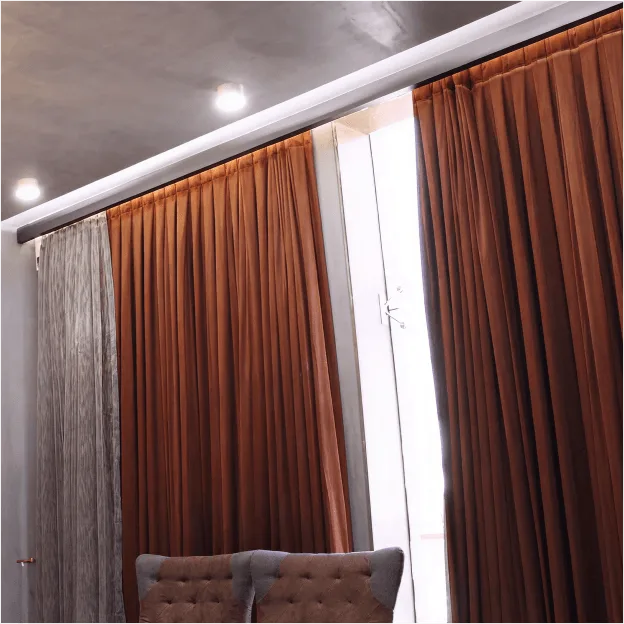
| Curtain automation | Curtain Flow/Core motors plus single and dual controllers | Connectivity differs by model: Wi-Fi, RF, physical, touch and app options |
| IR blaster and emitter | App, scene and voice control of ACs, TVs, projectors and AV equipment | IR is generally command-based; status accuracy depends on implementation |
| Digital locks and access | Bolt Core, Pro and Pro Max locks, door controllers and gate controllers | Core is local/non-Wi-Fi; Pro models add connected functions |
| Smart Way Control | Scene switches and NFC tags | Useful shortcuts but primarily within the SmartNode experience |
| SmartNode app | Schedules, scenes, geofencing, notifications, guest/child access, lighting and HVAC control | Buyers depend on continued application and platform support |

The module combinations are a genuine strength: fans, dimmers, ordinary circuits and heavier appliances do not have to fit one generic relay template. Exact ratings and driver compatibility should still be checked against the proposed SKU. SmartNode publishes the individual combinations.
For premium lighting, SmartNode’s Wi-Fi DALI gateways support DALI 1/2, DT6/DT8 and up to 64 devices per channel, according to the company. See SmartNode’s DALI information. Buyers requiring certified multi-vendor interoperability should separately verify DALI-2 certification for every component.
Curtain Flow uses Wi-Fi, Curtain Core does not, and controllers support third-party motors. Security includes local/connected locks plus door and gate controllers; IR handles HVAC and AV. The range covers most visible functions in an apartment or villa.
What SmartNode does well
1. It is genuinely retrofit-friendly
The strongest reason to consider SmartNode is installation practicality. The backend modules are designed to sit behind existing switchboards, allowing regular switches to keep working. For many renovations, that avoids new wall chasing, specialist bus cabling and changes to the interior design. SmartNode explicitly positions the range for existing homes without rewiring.
2. It understands common Indian electrical loads
Fans, mixed switchboards, dimmable decorative lighting, geysers and air conditioners are common requirements in India. SmartNode offers numerous backend combinations instead of treating the home as a collection of identical smart bulbs. This can reduce the number of modules and simplify the finished switchboard when the correct product is specified.
3. The home does not become unusable when the internet fails
It would be inaccurate to say a SmartNode home stops working without the internet. Regular switches and compatible panels remain available. SmartNode also says supported products can execute preset schedules without internet and that local-network communication keeps controls operating for certain use cases. The company documents physical and offline operation on its product pages.
Buyers should ask which app controls, scenes and integrations remain available when the internet or SmartNode cloud is unavailable. “Works without internet” can mean anything from manual switching to complete local app control.
4. The visible interfaces are flexible
Custom panels, keypads, scene controls and screens can match an interior and provide dedicated control without relying on a phone.
5. It offers more integration than a closed-app caricature suggests
SmartNode lists Alexa, Google Home, Apple Home, Nice, RCL, Control4 and CUE; an older manual also names SmartThings. See current integrations and older guidance.
These claims enable broader voice or interface control. Buyers should still ask which current models and functions are supported, whether connections are local or cloud-mediated, and whether formal certification applies.
6. The warranty is longer than many budget-device warranties
SmartNode’s five-year limited warranty covers repair or replacement for manufacturing defects; replacements retain the remaining original term. Read the policy.
That is reassuring, provided the homeowner retains the invoice and uses compliant installation, earthing and load protection.
The main drawbacks of choosing SmartNode
1. The core platform is not open-protocol compatible
SmartNode is not an open-protocol smart-home platform. Across the public product pages and manuals we reviewed on 14 August 2026, its core connected range is built around SmartNode-controlled Wi-Fi modules—not Matter, Zigbee, Z-Wave or Thread devices. We also found no public local API, MQTT documentation or native Home Assistant integration.
SmartNode does sell DALI gateways, but opening one lighting layer through DALI does not make the whole-home platform open. Custom or dealer-only integrations may also exist, but buyers still do not receive a documented open replacement path for the core system.
Homes change: sensors, locks, energy devices and controllers are added or replaced. Standards and stable local interfaces make that easier because the next component need not come from the original manufacturer.
2. Named integrations do not automatically equal interoperability
“Works with Alexa” is helpful, but it does not answer whether a third-party controller can commission the device locally, read every state, create automations without the vendor cloud or preserve full functionality if an account-linking service changes.
The same applies to Apple Home, SmartThings and professional AV systems. An integration bridges platforms; an interoperable device standard defines how different manufacturers’ products communicate.
Matter is important because it can operate over Wi-Fi: this is not Wi-Fi versus Matter. The Connectivity Standards Alliance describes Matter as an IP-based standard using Wi-Fi, Thread or Ethernet. A Wi-Fi relay can therefore retain familiar networking while offering standardised Matter commissioning and control.
SmartNode may expand its support after this review. Until the company publishes a model-level matrix, buyers should request the following in writing:
- Exact supported platform for every proposed SKU
- Features exposed to each platform
- Local or cloud communication path
- Behaviour without internet
- Certification or integration status
- Whether the device can be moved to another controller without replacement
3. Hub-free is convenient, but it is not automatically more scalable
“No hub required” sounds like an unqualified benefit. For a few modules, it often is: one less box, lower entry cost and an easier sales story.
At whole-home scale, every Wi-Fi module participates in the household network. Reliability depends on access points, coverage, interference, channel planning, power backup and credential management. There is no honest universal device limit: a designed multi-access-point network and a basic ISP router are different systems.
Zigbee and Z-Wave move low-bandwidth automation traffic onto a dedicated mesh; Thread uses an IP mesh and border router. These designs add hardware but separate automation devices from ordinary Wi-Fi clients.
The practical takeaway is not “Wi-Fi always fails.” It is: include the network as part of the SmartNode design and price. Ask who owns the router configuration, what happens when the SSID or password changes, how dead zones are handled, and whether network support is included after handover.
4. The application and firmware remain lifecycle dependencies
The app is actively maintained: Google Play showed a July 2026 update, while Apple showed 4.5/5 from 77 ratings on our research date. See Google Play and Apple’s App Store. These are positive signals, not future guarantees.
Several product pages describe OTA updates as available “upon request.” Buyers should ask whether updates are automatic, how long each generation is supported, and whether configurations can be exported and restored.
Physical controls reduce this risk but cannot preserve every smart feature if an application or integration is retired.
5. Whole-home pricing is difficult to compare publicly
SmartNode’s website is quotation-led. It explains products in considerable detail but does not provide a complete public retail or installed price list for a representative apartment or villa.
That does not mean SmartNode is expensive. It means buyers need an itemised quote covering modules, interfaces, curtains/DALI, networking, installation, programming, integrations, tax, support and replacements before declaring it cheaper.
6. The five-year warranty has important conditions
The warranty is not an unconditional swap. It requires proof of purchase, original condition and compliant installation. Exclusions include unstable power, water, overloading, incompatible equipment, improper earthing, damage and unauthorised modification. Claims start from the installation site and may require inspection before replacement. Read the full warranty.
Such conditions are common, but buyers should establish who pays for diagnosis, removal, shipping, reinstallation and reprogramming.
7. The catalogue is broad, but future category choice is still narrower than a multi-protocol ecosystem
SmartNode is strong in switching, curtains, IR and panels. A mature multi-protocol system can source motion, presence, leak, air-quality, energy, climate and security devices independently—allowing a category to change later without replacing the backbone.
SmartNode vs Wi-Fi, Zigbee, Z-Wave, Matter, DALI and KNX
These terms are often compared as though they do the same job. They do not.
| Architecture | Strength | Trade-off | Best fit |
|---|---|---|---|
| Direct Wi-Fi platform such as SmartNode’s core range | No dedicated hub, familiar networking, straightforward retrofit | Network and platform lifecycle need careful planning; interoperability depends on implemented standards/APIs | Small or contained retrofit, budget-led buyer |
| Zigbee | Low-power self-healing mesh and large certified device ecosystem | Requires a coordinator/hub; certification and hub support still matter | Whole-home retrofit with many switches and sensors |
| Z-Wave | Certified product-level interoperability, sub-GHz mesh and backward compatibility | Higher device cost and a smaller India selection | Premium, security-oriented automation |
| Matter over Wi-Fi or Thread | Cross-platform IP application standard; multi-admin potential | Device-category coverage and feature parity continue to evolve | Buyers prioritising cross-ecosystem flexibility |
| DALI/DALI-2 | Precise addressable lighting and certified cross-vendor lighting components | Focused on lighting, not the entire smart home | Premium lighting, commercial spaces and new builds |
| KNX | Long-lived, decentralised open building standard across many manufacturers | Higher design, programming and installation cost; wired projects are easiest during construction | New-build villas and large premium projects |
The Connectivity Standards Alliance describes certified Zigbee as a standardised, low-power, self-healing mesh. The Z-Wave Alliance bases product-level interoperability on certification. The DALI Alliance independently verifies DALI-2 test results, and KNX reports more than 8,000 certified products from over 500 manufacturers.
No protocol eliminates good design. Zigbee needs sufficient routers, Z-Wave needs the correct regional frequency, Matter feature sets vary by controller, and KNX/DALI need competent commissioning. “Open” is an architectural advantage, not magic.
Who should choose SmartNode?
SmartNode deserves consideration when most of these are true:
- Your home is already finished and you want minimal disruption.
- Your priorities are lights, fans, dimming, curtains, AC/TV control and scenes.
- You value coordinated panels and prefer one installer and application.
- Your scope is unlikely to expand into many third-party sensors or specialist devices.
- The itemised quotation is meaningfully lower than a multi-protocol alternative after networking and integration are included.
- Offline behaviour, integrations, warranty labour and support are confirmed in writing.
For that buyer, SmartNode can be a practical system. Paying for theoretical flexibility is pointless if it will never be used.
Who should consider a SmartNode alternative?
Look beyond SmartNode if several of these are important:
- Automation will be permanent building infrastructure and mix many manufacturers.
- Sensors and event-driven automation matter as much as switch control.
- You want Matter, Zigbee, Z-Wave, Thread, KNX or DALI certification documented per product.
- You want Home Assistant, MQTT, configuration export or another independent local controller.
- You are building a large villa where a planned wired or hybrid backbone is financially reasonable.
Better SmartNode alternatives by buyer type
For a whole-home wireless retrofit: a Zigbee and Matter hub architecture
A hub-based design is usually our first comparison for a full apartment: Zigbee handles switches and sensors on a dedicated mesh, Matter connects major ecosystems, and Wi-Fi remains for cameras and screens.
Aqara is one example: Hub M3 publishes Wi-Fi, Zigbee, Thread and Bluetooth support and acts as a Matter controller/bridge. See its specifications. Aqara still has its own compatibility rules; its advantage here is an explicit protocol and bridging role.
For a branded Indian retrofit with multiprotocol expansion: Schneider Wiser 2.0
Schneider Electric’s Indian Wiser 2.0 material describes a multiprotocol gateway, Zigbee/Z-Wave lock support, Wi-Fi switches and energy management. See Wiser 2.0. It remains managed, but its expansion story is clearer.
For a new premium home: KNX with DALI and wireless bridges
With open walls, KNX is a durable baseline. DALI can handle addressable lighting, with gateways adding Matter or Zigbee. The higher design cost is justified only by project scale and lifecycle.
For maximum flexibility: a designed multi-brand system
The strongest alternative may be an architecture, not another logo:
- KNX or DALI where wired reliability is valuable
- Zigbee or Z-Wave for low-power mesh devices
- Matter over Wi-Fi or Thread for cross-platform products
- Wi-Fi for cameras, media and high-bandwidth interfaces
- A documented local controller and replaceable gateways
This needs more design effort but gives the homeowner more ways to evolve without starting again.
Questions to ask before accepting a SmartNode quotation
Use this checklist with SmartNode—or any automation vendor:
- What protocol does every quoted product use?
- Which physical, phone and automation functions work without internet?
- Which automations run locally, and which depend on the cloud?
- Are third-party integrations local or cloud-based, and is there a model-level matrix?
- Do any proposed models support Matter, Zigbee, Z-Wave, Thread, MQTT or a local API?
- What happens when the router, SSID or password changes, and is the Wi-Fi survey included?
- How are firmware updates delivered, and for how many years?
- Can another authorised installer export and restore the configuration?
- What labour, travel, shipping and programming sit outside the warranty?
- What is the fully installed price, including tax, panels, networking and integrations?
If an installer answers these clearly in writing, the brand name becomes less important. You are buying a documented system rather than a promise.
Final verdict: good retrofit value, but scrutinise the foundation
SmartNode is not a bad solution because it uses Wi-Fi. It has strong Indian load combinations, physical controls, polished interfaces, DALI options and a five-year limited warranty. A budget-conscious buyer with a contained scope may be satisfied.
The concern begins when “easy retrofit” becomes “future-proof ecosystem.” SmartNode is not open-protocol compatible at the core platform level, and named third-party integrations do not change that architecture. This matters when automation becomes permanent infrastructure and the homeowner wants to replace a device, controller or service without returning to the same vendor.
Our recommendation is simple: choose the architecture before choosing the switch. Compare the SmartNode quotation with a Zigbee, Matter or multi-protocol design. If SmartNode still wins after you account for offline control, network design, third-party choice, updates, warranty labour and future replacement, it is a rational purchase. If long-term freedom is worth more than the lowest entry cost, build on documented open protocols instead.
Ask Smartify for an itemised architecture comparison before committing to a whole-home platform.
Frequently asked questions
Is SmartNode a good home-automation system?
SmartNode can be a good contained retrofit for lighting, fans, curtains, AC/TV control and scenes when retaining existing wiring matters. It is not an open-protocol choice and is therefore less suitable when local developer access, independent controllers or broad multi-vendor expansion are required.
Does SmartNode work without the internet?
SmartNode says switches, compatible panels, supported schedules and some local-network controls continue without internet. Ask the installer to demonstrate app functions, scenes and third-party integrations with the internet disconnected.
Is SmartNode based on Wi-Fi, Zigbee or Z-Wave?
Core connected modules are documented as Wi-Fi products; DALI, RF and IR appear elsewhere in the range. We found no current public documentation identifying Zigbee or Z-Wave across the core range on 14 August 2026.
Does SmartNode support Matter?
We found no current Matter support on the public product pages reviewed in August 2026. Ask for a Matter certificate or model-specific written confirmation.
Does SmartNode integrate with Alexa, Google Home, Apple Home or SmartThings?
SmartNode advertises Alexa, Google Home and Apple Home; an older manual names SmartThings. Request a current model-level matrix showing features and local/cloud operation.
Is Zigbee always better than SmartNode’s Wi-Fi system?
No. Wi-Fi can be simpler for a few powered devices. Zigbee becomes attractive with many low-power devices and sensors. Certification, hub quality and network design matter more than the protocol name alone.
What are the best SmartNode alternatives?
Compare Aqara-style Zigbee/Matter hubs, Schneider Wiser 2.0 multiprotocol systems, or KNX/DALI for premium new builds. Maximum choice comes from a multi-brand architecture using the right protocol per category.
How much does SmartNode home automation cost?
SmartNode does not publish a complete whole-home price list on its current website. Cost depends on module combinations, touch interfaces, curtains, locks, lighting control, networking, installation and integrations. Ask for an itemised quote and compare the fully installed project rather than a single module price.